

Dear Members of Human Right 2 Water,
August is traditionally a busy month for HR2W, in the lead up to World Water Week in Stockholm. We covered a wide range of topics this year, debating biodiversity as an independent human right; menstrual health and hygiene management and their link with human rights; advancing scientific solutions for water scarcity, ecosystems and climate resilience; and the importance of safeguarding cultural heritage against climatic events. We were also able to launch our new online due diligence assessment checklist for water service providers (www.hr2wise.com), while meeting partners at our shared exhibition stand throughout the week. Here are some highlights:
Advancing Scientific Solutions for Water Scarcity, Ecosystems and Climate Resilience
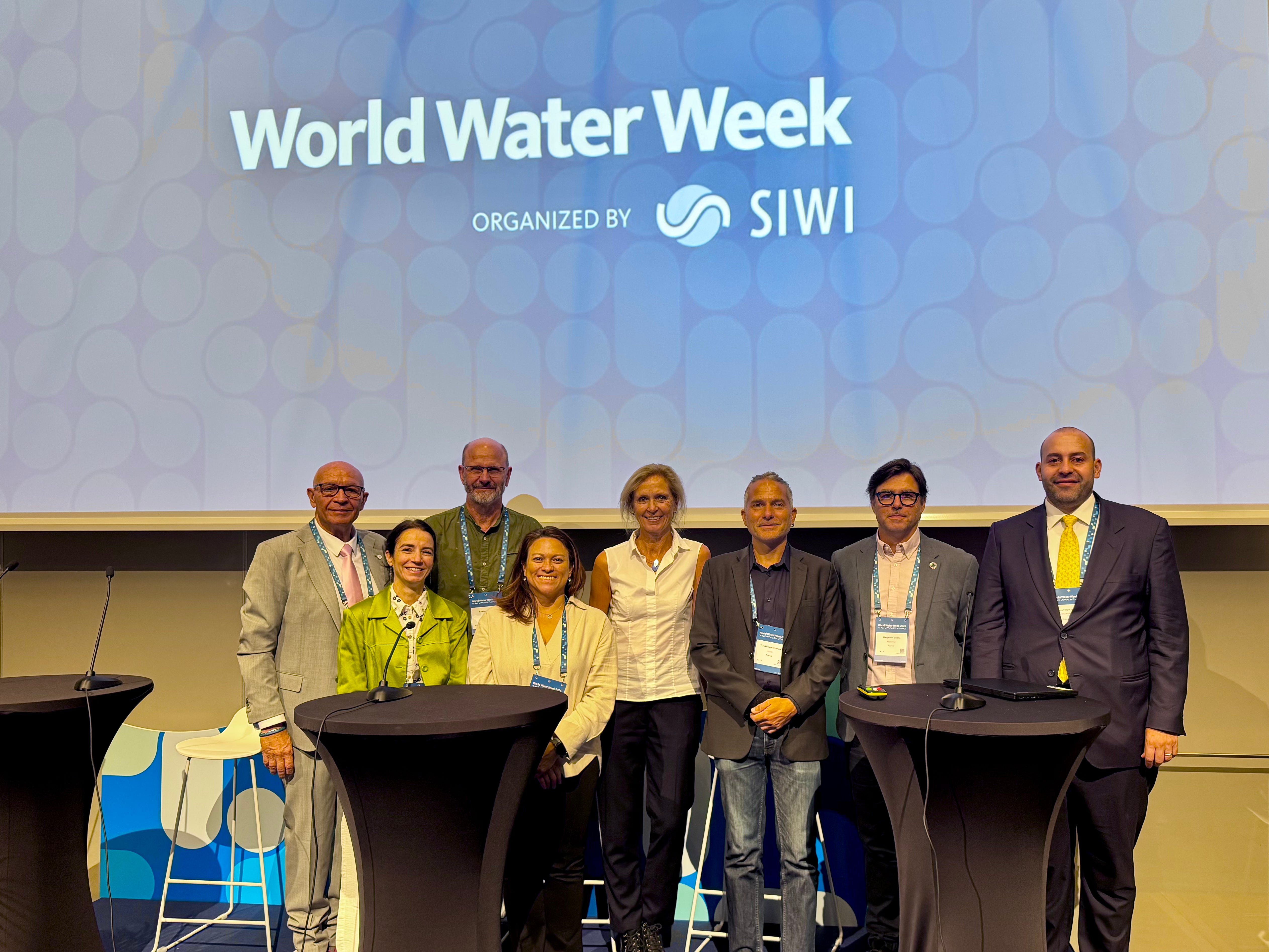
We kicked off the week with an official side-event co-hosted with Water4All, OAS, Veolia, WaterEurope and IHE Delft to explore how scientific and technical innovation can address water scarcity through ecosystem-based and climate-resilient approaches. Amanda Loeffen introduced the topic by asking the question: How do we turn science into solutions that work in practice, and at the scale that we need?
She then introduced Graham Jewitt (IHE Delft) who framed human and social capital as core to water innovation, reminding the room that natural ecosystems are infrastructure in their own right. David Maisonneuve (Veolia) walked through the four types of innovation Veolia applies in practice, cautioning that technology should support human expertise rather than replace it. Natasha Avendaño García (CEO, Bogotá Aqueduct and Sewerage Company) shared Colombia’s water security strategy, and Andrea Rubini (Water Europe/Water4All) introduced Water-Oriented Living Labs as a model for scaling innovation from the ground up. After an engaged Mentimeter and Q&A session moderated by Delfina Iervolino and Andres Sanchez (OAS), Benjamin Lopez (Water4All) rounded up the topic with three key messages: science alone won’t solve water scarcity, resilience needs both nature and infrastructure, and the next decade is about integration and financing at scale.
Session: Safeguarding Heritage Before It’s Too Late
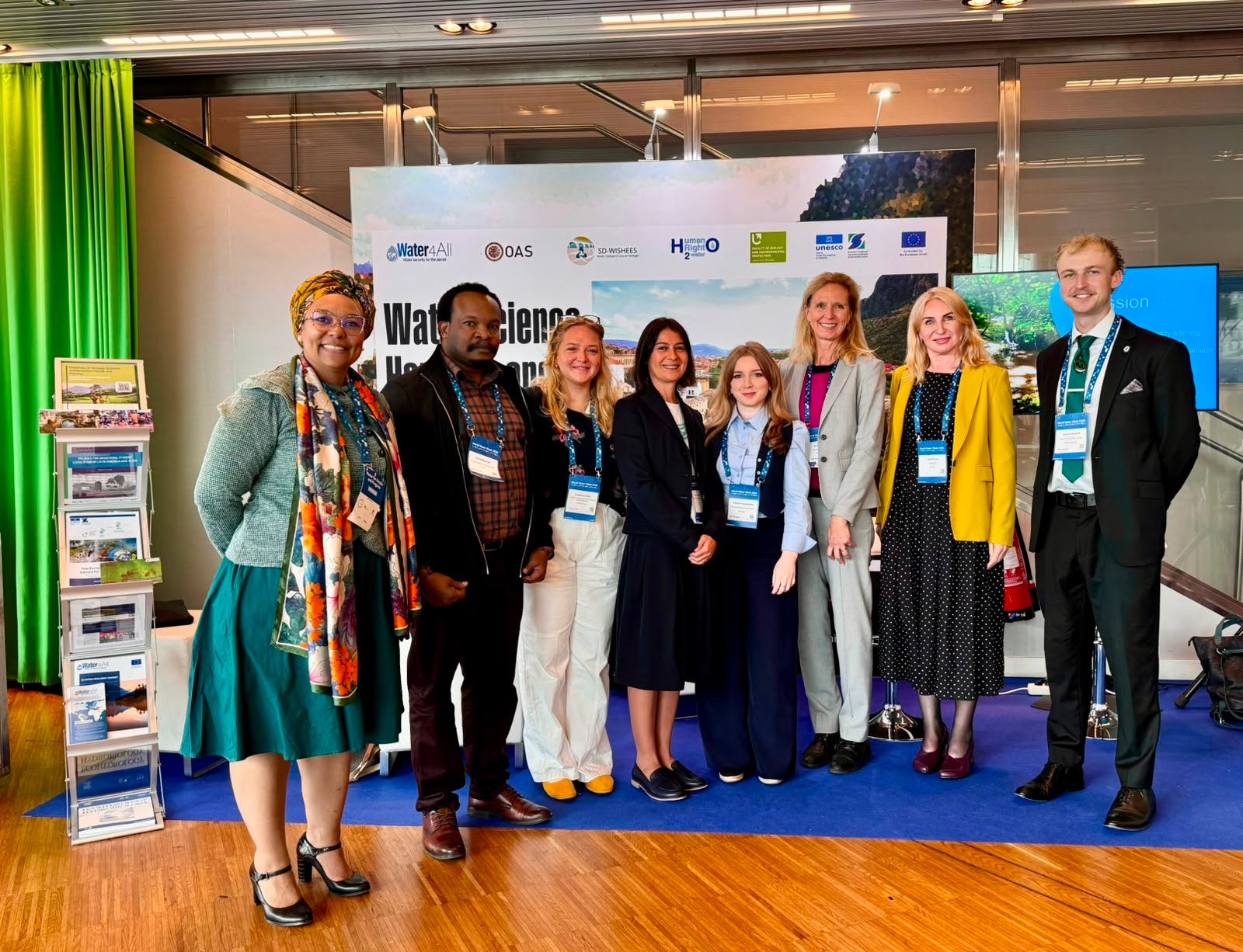
This interactive session convened with UNESCO and the SD-WISHEES EU project, addressed the growing risks climate extremes pose to cultural heritage and what it will take to better protect it — from stronger integration into water and climate strategies to more proactive, risk-informed approaches. Amanda Loeffen moderated a very insightful and diverse group of presentations including Ave Paulus (ICOMOS, Estonia) on heritage conservation, Connor Redmile (Te Kura Taka Pini, New Zealand) on climate adaptation from an Indigenous community perspective, Jacob Diamond (UNESCO) on World Heritage sites and hydro-heritage, Tutana Kvaratskhelia (WEG, Georgia) presenting the SD-WISHEES Research and Innovation Roadmap, and Dr James Mushori (African Academy of Sciences) delivering the closing synthesis. The discussion reinforced a core message: cultural heritage isn't only vulnerable to climate change, but it's also a source of Indigenous and traditional knowledge that can strengthen climate adaptation and build more resilient societies.
Integrating Menstrual Health into WASH Policy, Development and Public Health
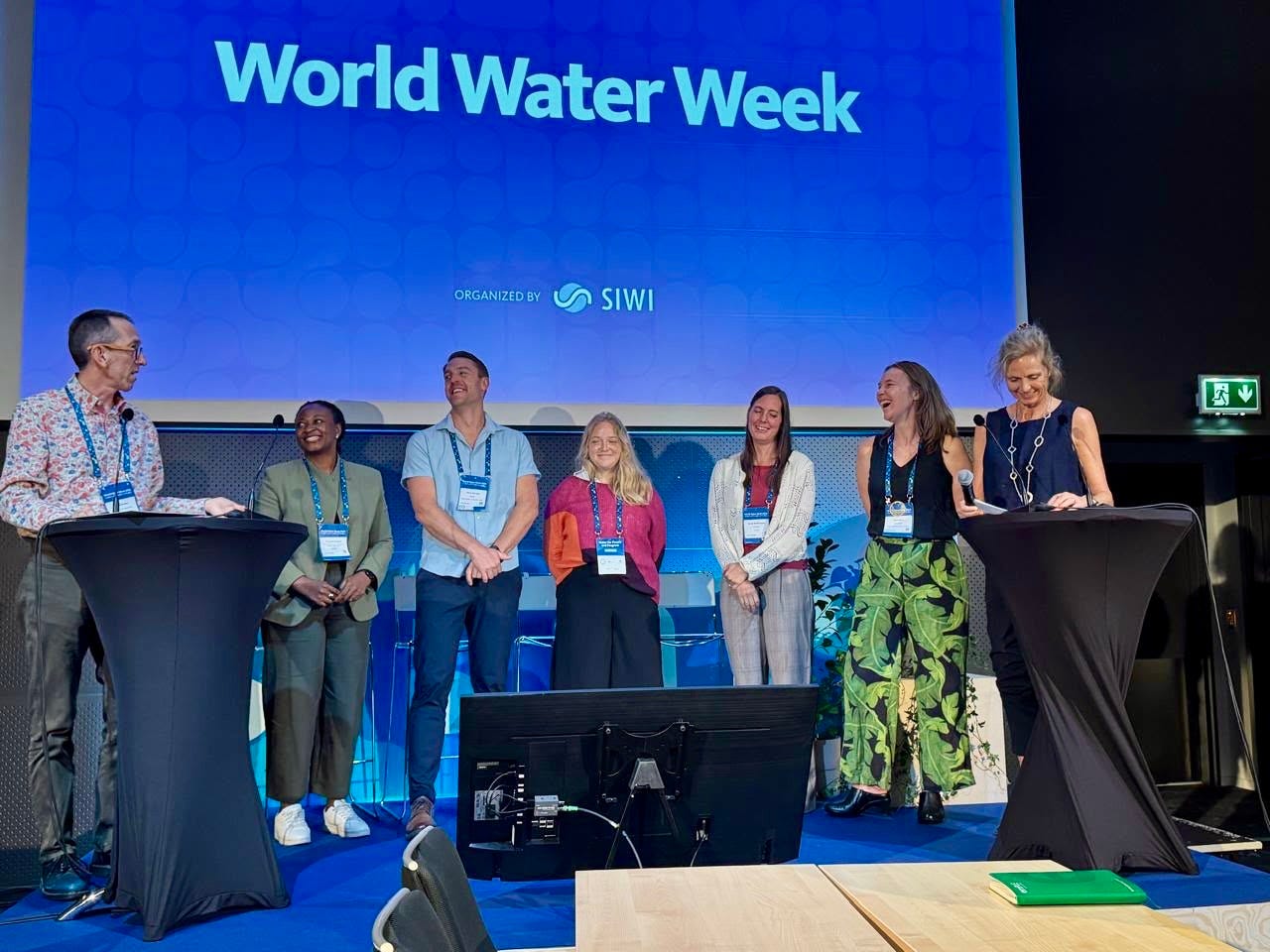
Menstrual health has too often been treated as a hygiene footnote rather than a rights issue — this session, moderated by HR2W, pushed back on that framing directly. It kicked off with Pedro Arrojo-Agudo, UN Special Rapporteur on the Human Rights to Safe Drinking Water and Sanitation, opening the session by calling for MHM to be treated as a human right rather than as a matter of charity.
“The stigma and the shame generated by stereotypes surrounding menstruation have serious repercussions on all aspects of the human rights of women and girls, including their human rights, equity, health, including, of course, sexual and reproductive health, housing, water, education, freedom of religion or belief.” - Pedro Arrojo-Agudo
Isabella Cubillo (HR2W) walked participants through HR2W’s benchmarking work with White & Case across 31 countries, where the countries studied incorporated only 45% of legal provisions required by human rights standards, and shared HR2W’s recent Latin America and Spain report, sharing how countries are starting to integrate MHM policies across the region.
The analysis was followed by insights from experts working on MHM: Comfort Kanshio (African Ministers Commission on Water) grounded the conversation in Africa’s implementation landscape, Chris Nicoletti (Splash International) made the case for schools as a lever for change, Elise Mann (iDE) shared a case study on locally-driven innovation, and Marije Broekhuijsen (UNICEF) closed by calling for country-level leadership matched with global momentum through the Global Menstrual Collective and the Shared Agenda.
Aquatic Biodiversity, Human Rights, and Water for People’s Progress
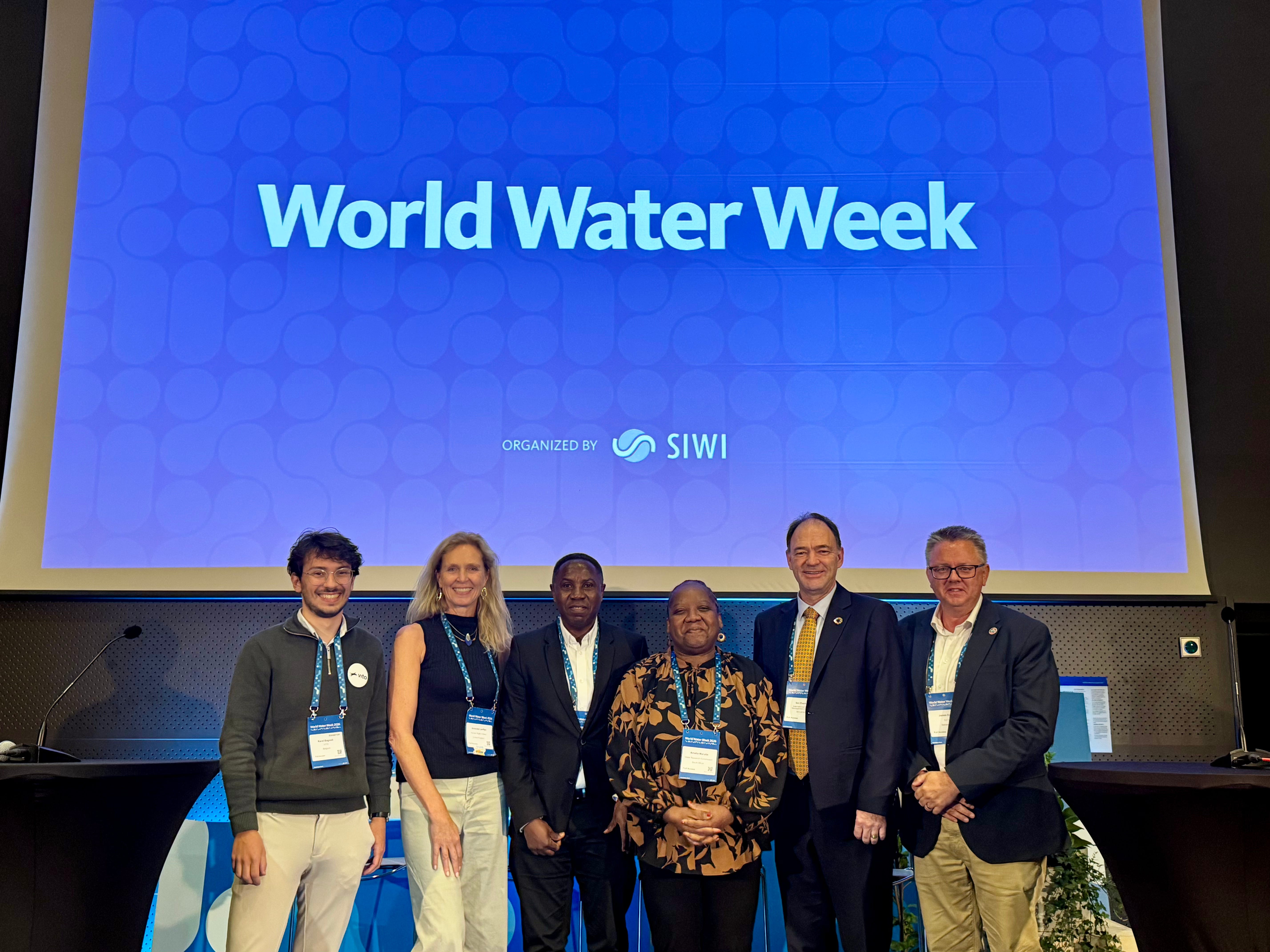
Water security, biodiversity and human rights are rarely discussed in the same room — so together with the Water Research Commission, IUCN, VITO, and IWMI, we decided to change that. The conversation covered science, policy and socio- economics, circling the key question: does aquatic biodiversity deserve recognition as a human right in its own right?
Stanley Liphadzi (Water Research Commission) opened the session with lessons from South Africa’s work protecting strategic water source areas, while Amanda Loeffen took the conversation further, arguing that a standalone right to biodiversity could move ecosystems from being protected in theory while still remaining vulnerable in practice. James Dalton (IUCN) addressed the fact that we need to stop dwelling on what’s lost as ecosystems degrade and focus instead on what’s gained by investing in them and Ian Overton (IWMI) pointed to a persistent blind spot — the lack of an integrated approach linking data, human rights and water. Lastly, Karel Bagnoli (VITO) closed the loop with a case for natural capital accounting as a way to make the economic argument stick. After some animated discussion, what emerged wasn’t consensus so much as a shared instinct: water, biodiversity and human rights rise or fall together.
The conversation will continue with further discussions and resolutions at the UN-Water Conference in December.
Exhibition Stand
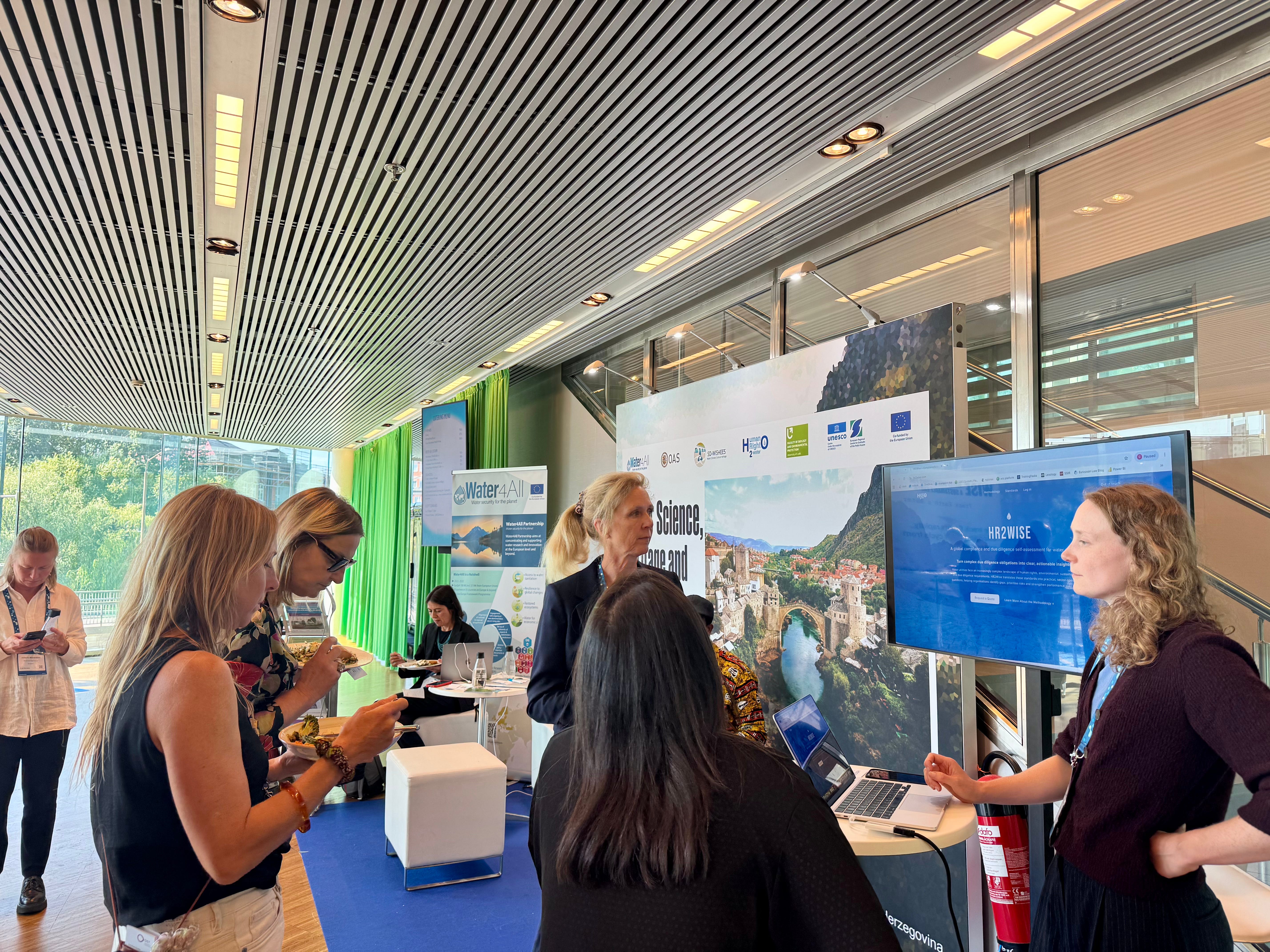
HR2W co-hosted a stand on ‘Water Science, Heritage and Climate Adaptation’ with Water4All partners, SD-WIshees and OAS. This presence gave us a location to connect with partners, exchange ideas and meet new faces from across the water sector. Beyond the formal sessions, we used the space to host mini roundtables — informal, smaller-format conversations that let us dig deeper into specific issues with partners and go beyond the panel format, creating room for candid exchange and new collaborations.
HR2Wise.com launch
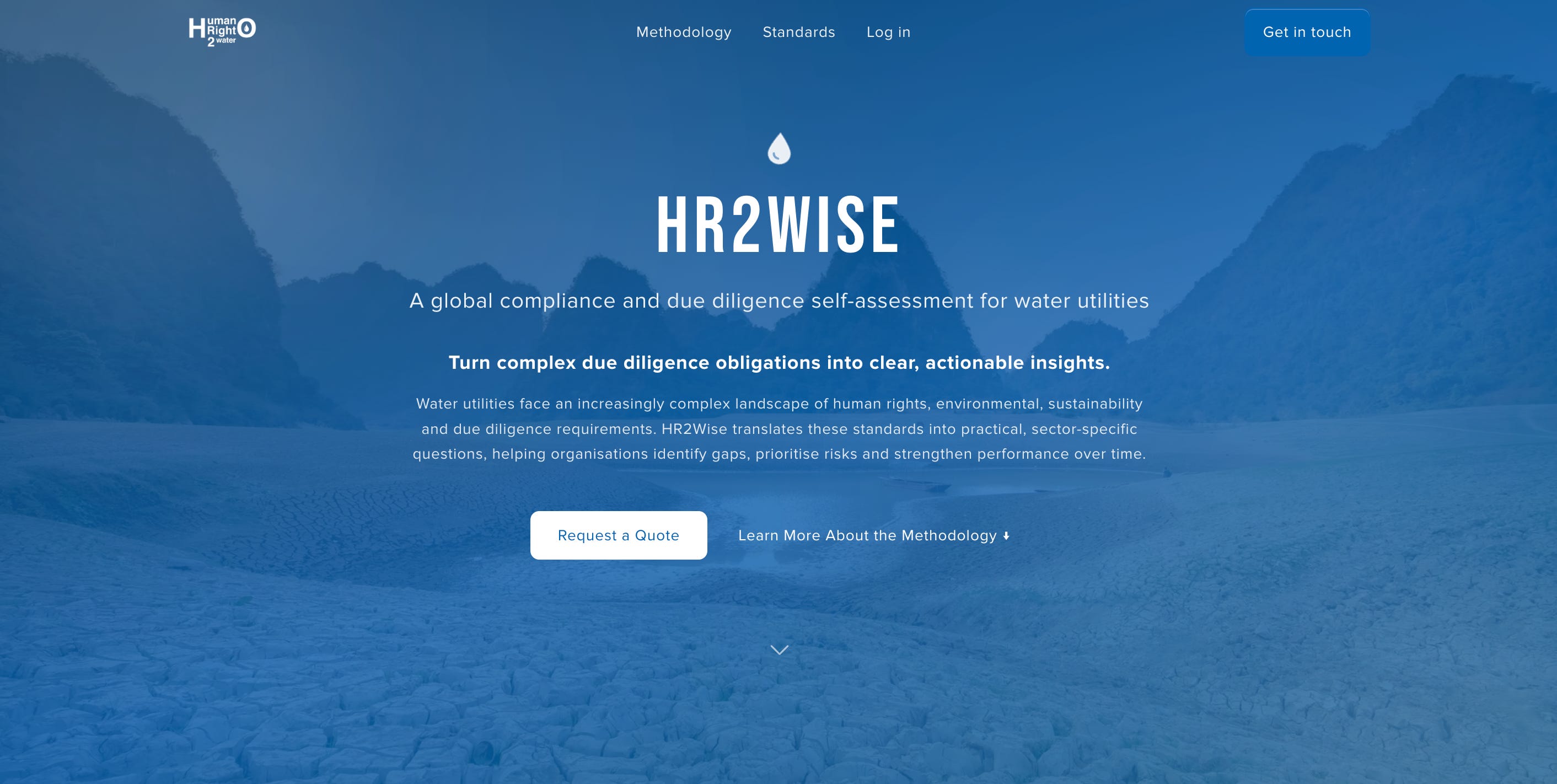
HR2WISE is our new digital governance and climate risk diagnostic tool for water utilities. It converts complex sustainability, human rights and regulatory standards into structured, business-relevant questions across 10 core themes based on the human rights-based approach principles and criteria - turning a guided self-assessment into automated analysis, visual risk heat maps, and a roadmap for improvement and investment. The tool is mapped to leading frameworks including references to General Comment no.15, the UN Guiding Principles on Business & Human Rights, SDG 6, the EU CSDDD and CSRD/ESRS, and the Water Framework Directive. Currently at the pilot stage, and we’re inviting water utilities to help test and shape it for global use - please reach out if you’d like to get involved.
That is all for August! Stay tuned for more updates and opportunities.
Best regards,
Isabella Cubillo
Communications Officer